
Catherine Kernan


















* consigned work
Artist's Statement:
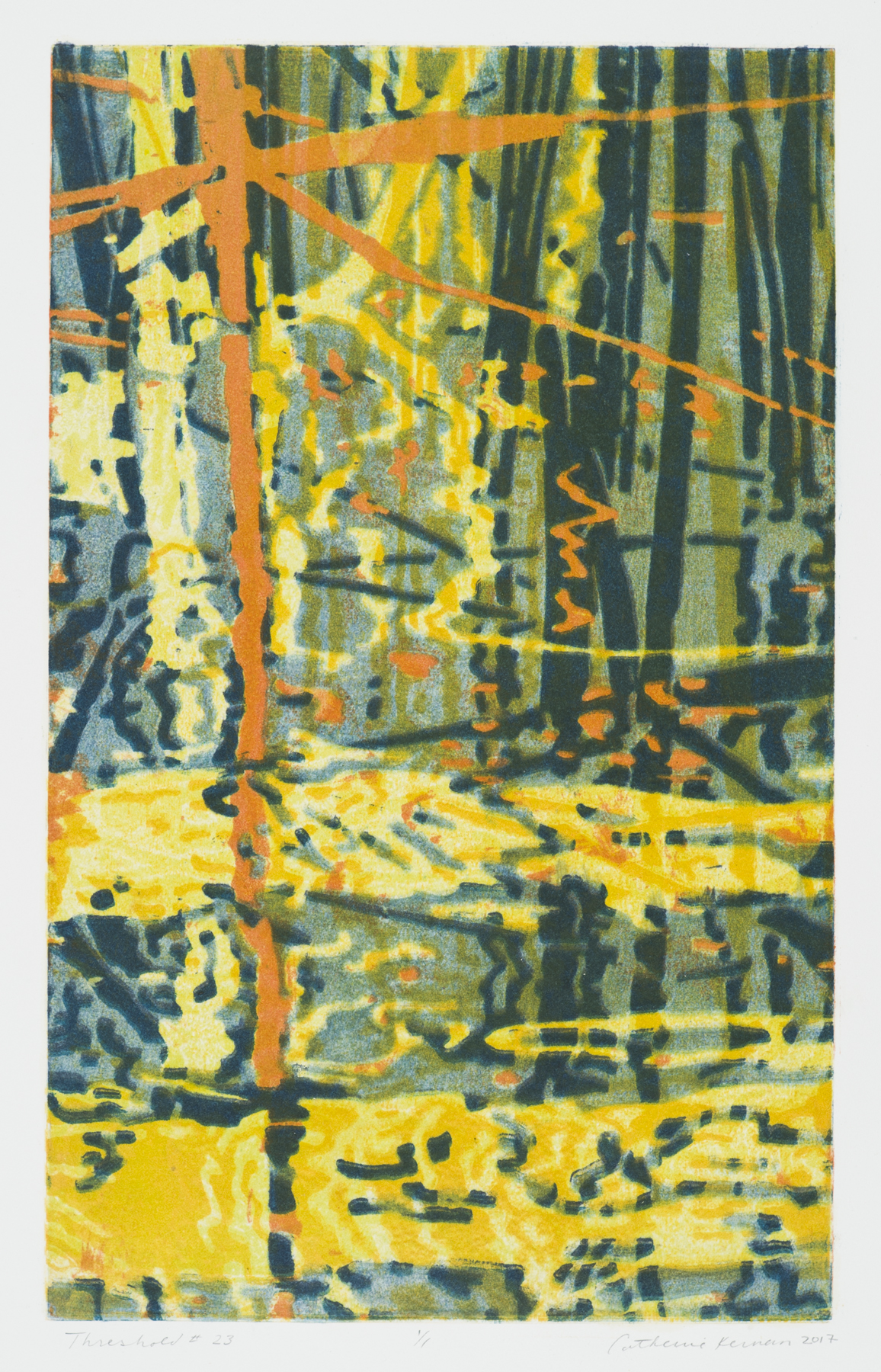
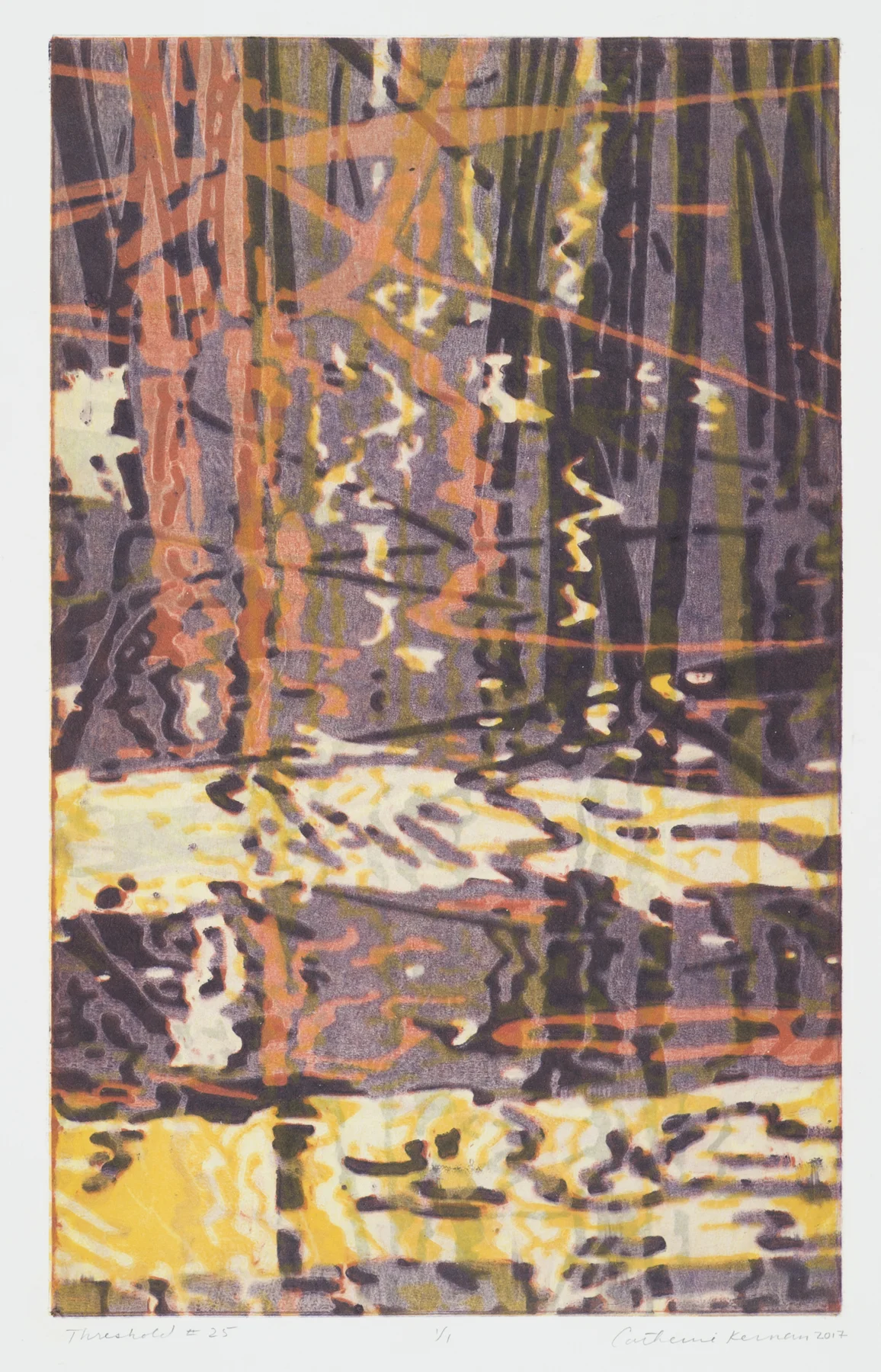
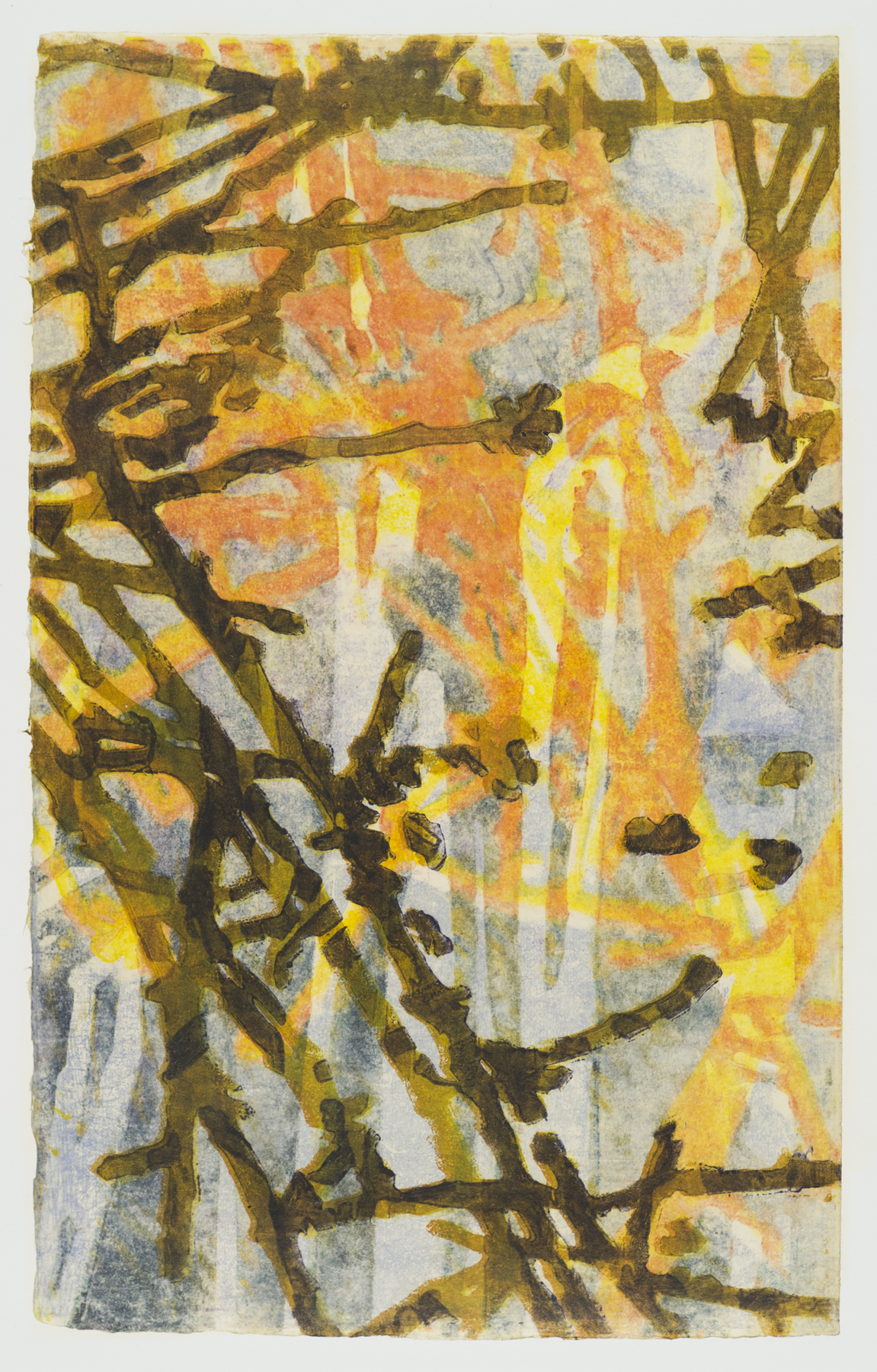
The monoprints titled Pollafukka Ravine #1 -#6 are based on paintings completed at the Ballinglen Arts Foundation in County Mayo, Ireland in May 1999. They represent an evolution in my imagery and incorporate recent technical explorations.
The landscape of County Mayo in western Ireland is visually stimulating. It is magnificent on a large scale, and luxuriantly varied in its details. The terrain is physically demanding and the weather is dramatic, a combination I find ideal and emphatically not benign.
My six residencies at the Ballinglen Arts Foundation since 1992 have had a major impact on my work. Because these residencies are times of focused search and scrutiny, they yield the major part of my source material for the rest of the year: sketchbooks of on-site watercolor paintings. I build a sketchbook page by page, sentence by sentence, letting the accumulated images build into a visual essay. My vision "clicks" in response to particular kinds of spatial situations. The paintings on which the Pollafukka Ravine prints are based came from just such a "click" situation.
By studying topographic maps, and inquiring of local residents, I located a mysterious, mist-shrouded ravine cutting down a hillside. On the map it was marked Pollafukka. In Irish "polla" means a hole or source, and fukka, or phuca, or fooka, means "ghost" or "spirit" (as in pook or puck). Hence, the name translates as "Hole of the Ghosts" or "Source of the Spirits" or "Spirit Ravine." It fulfilled the promise of its name.
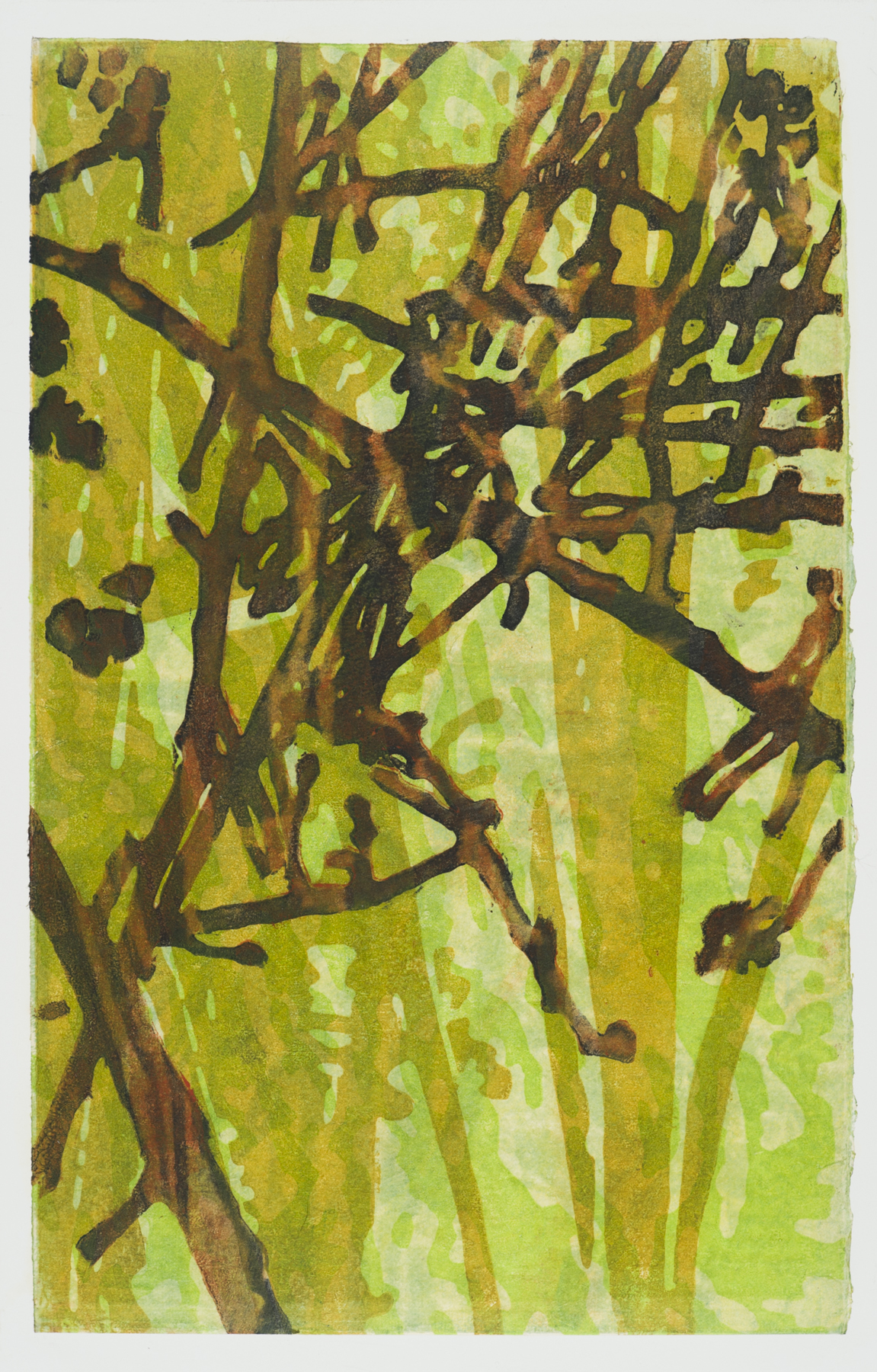
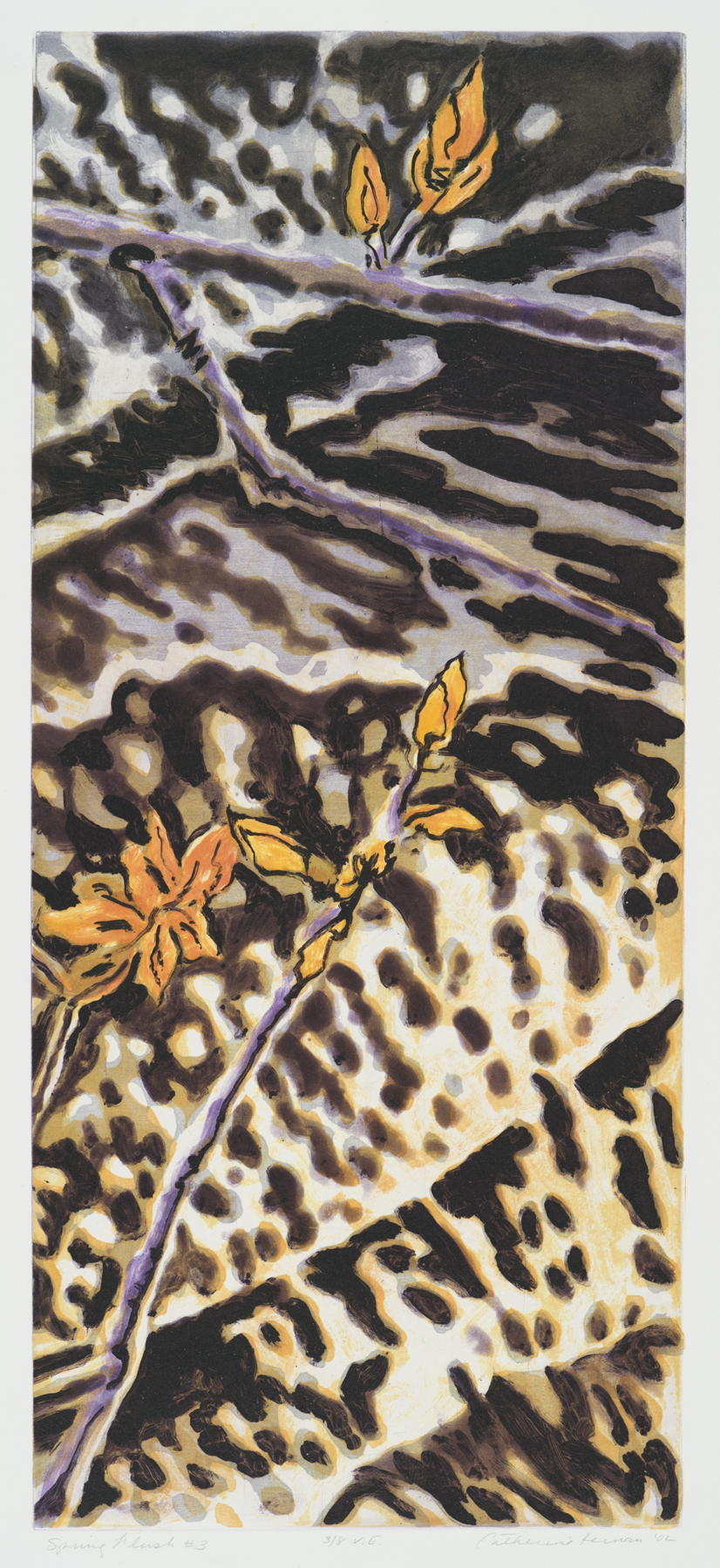
Climbing through mist, across fences and fields, among densely blossoming gorse bushes, up the rocky streambed, along muddy sheep trails, I found a magical place. As I peered through the scrim of bare branches, wet with rain and moss, at the swirling rush of spring water I saw in an unexpected way. A tangled thrust of leafless branches trimmed with new leaf buds crisscrossed the changing, rhythmic patterns of water. I found myself acutely aware of sudden shifts of focus, discontinuities of distance and level, layers of interference, and spatial ambiguity, . . . and the effort of looking. This experience translated into paintings, and subsequently prints.
Technically, Pollafukka Ravine #1-6 involved a combination of processes. Dark colors went down first, printed from a photogravure intaglio plate made from a hand-drawn film positive. Next I rolled each of two woodcut layers in several colors of transparent ink and printed them over the intaglio image. Working from a reversed image, to match the direction of the copper plate and wood blocks, I painted and rolled several layers of oil monotype on thin plastic. When transferred with the press these completed the print by adding spots of intense color, and deepening tonal shapes. The textural brushwork of the photogravure layer and the brushwork of the monotype layers integrate so completely that they are hard to distinguish. The flatter layers of woodcut provide underlying unity.
Benaderren Cliffs series
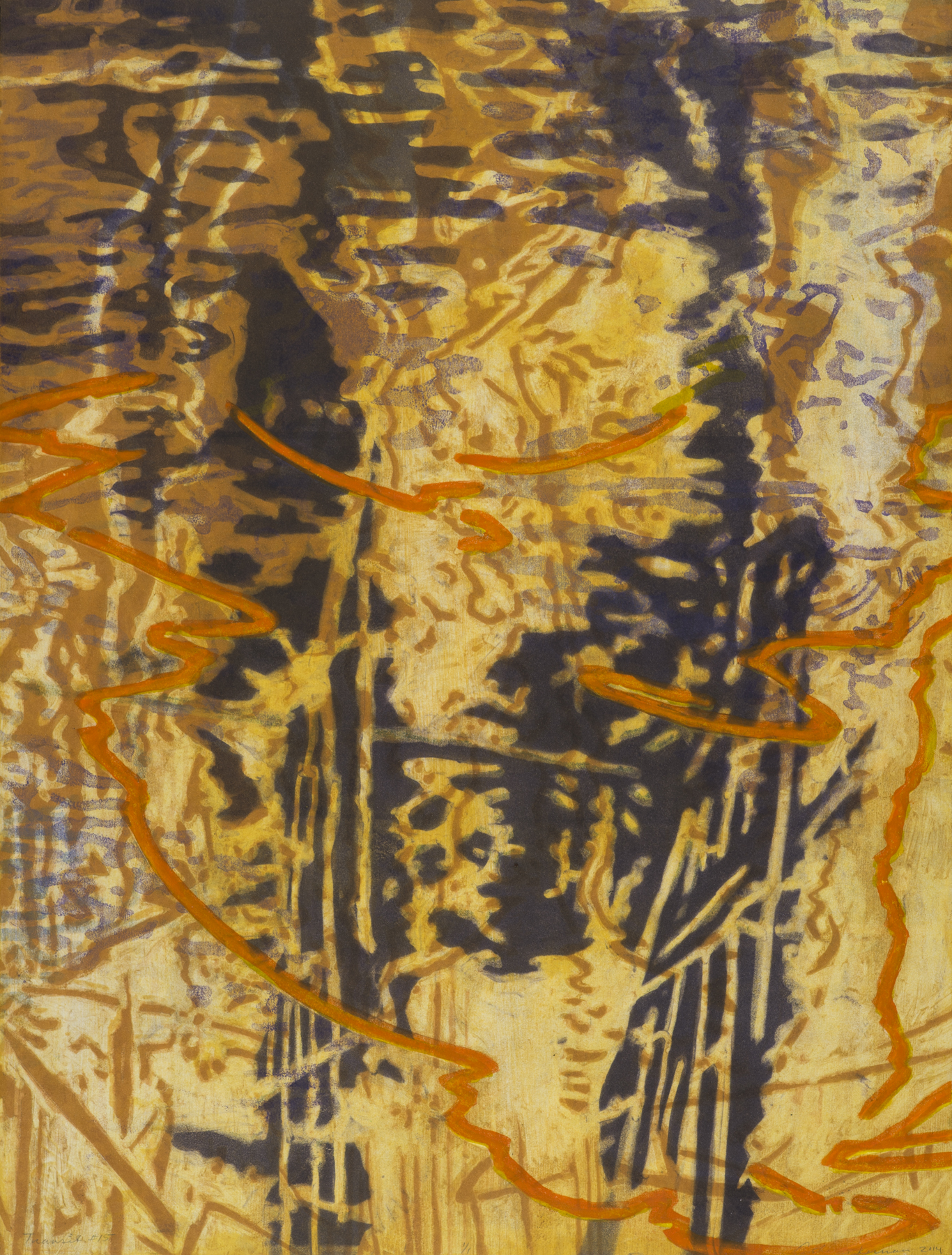
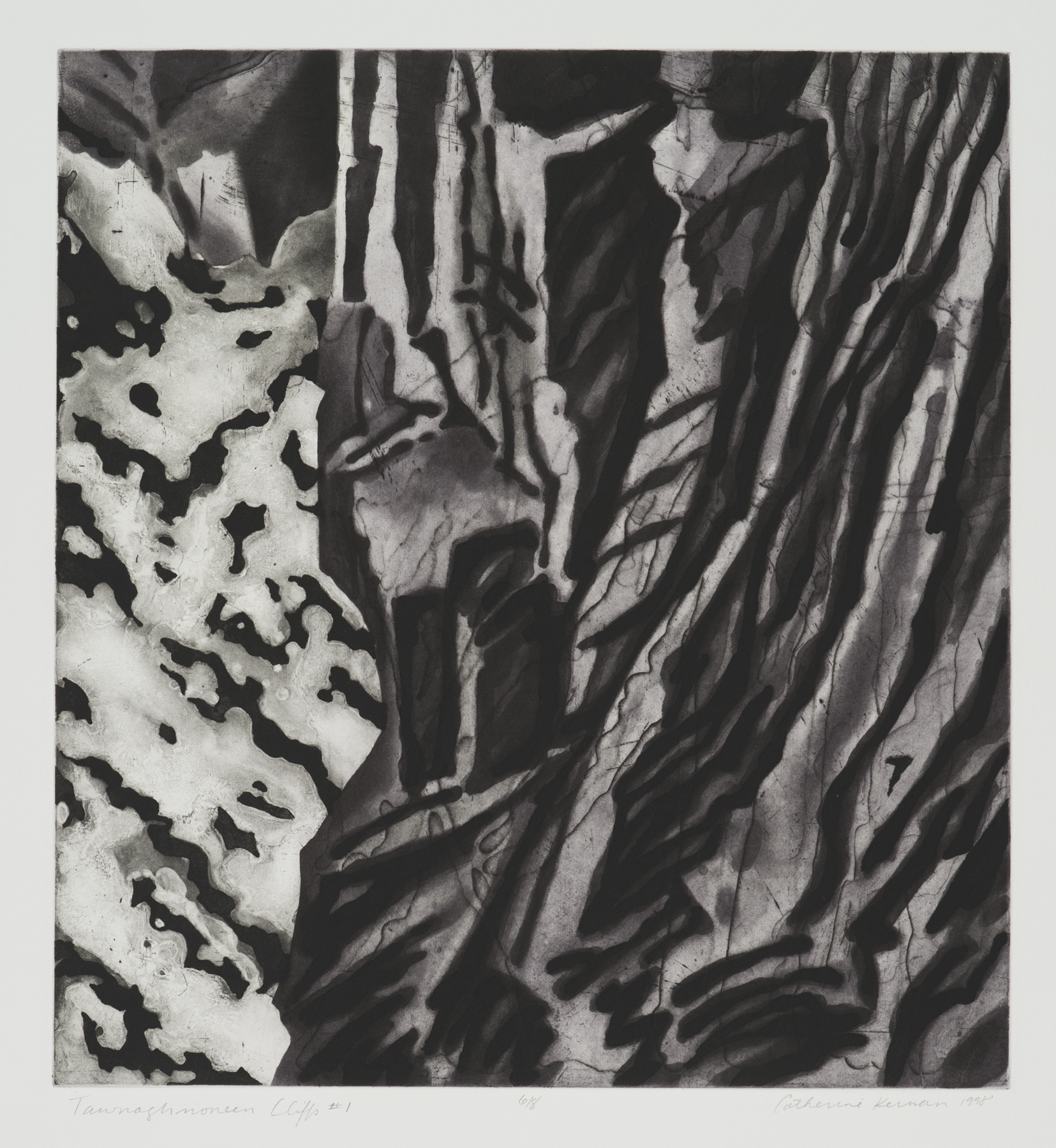
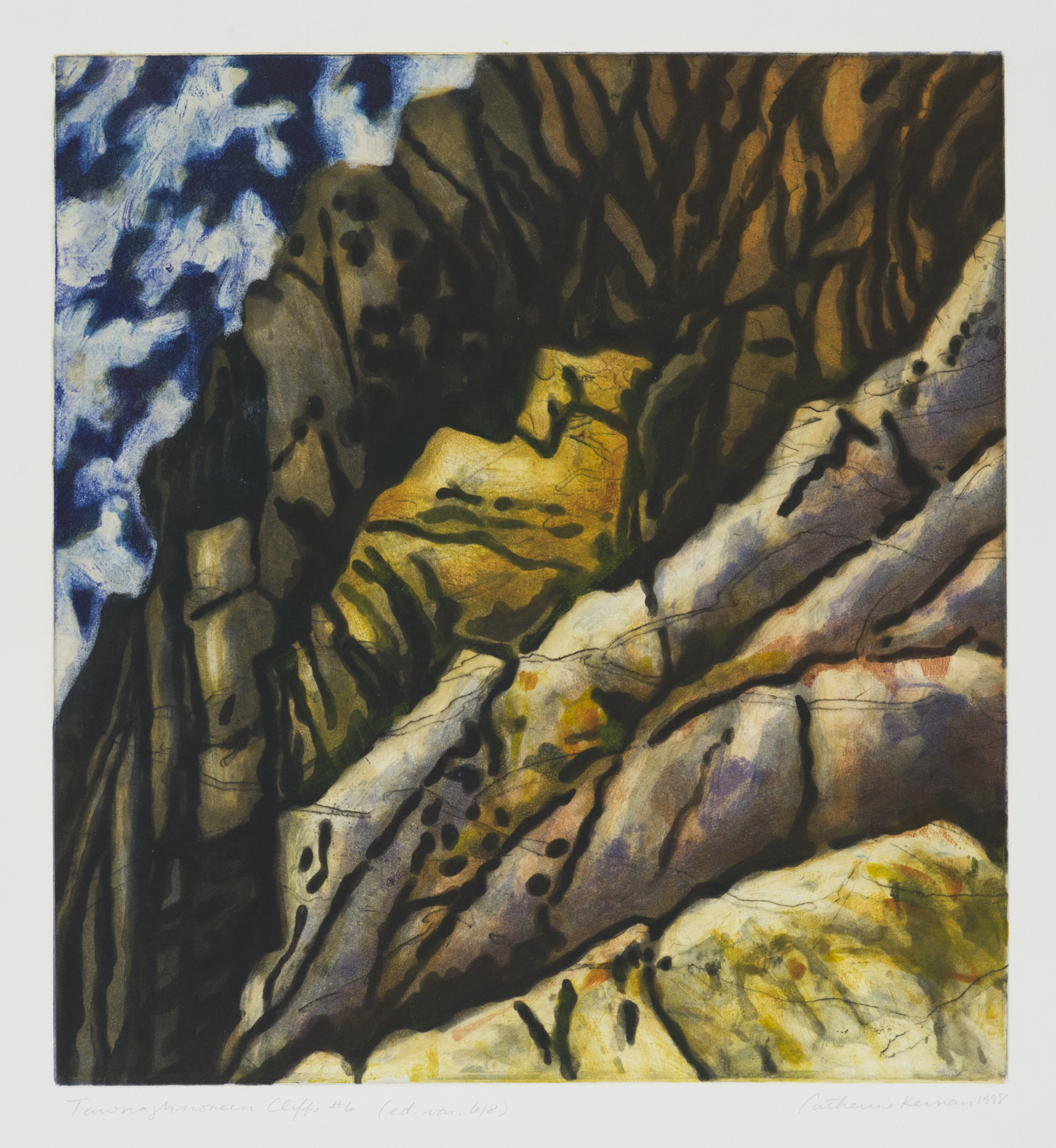
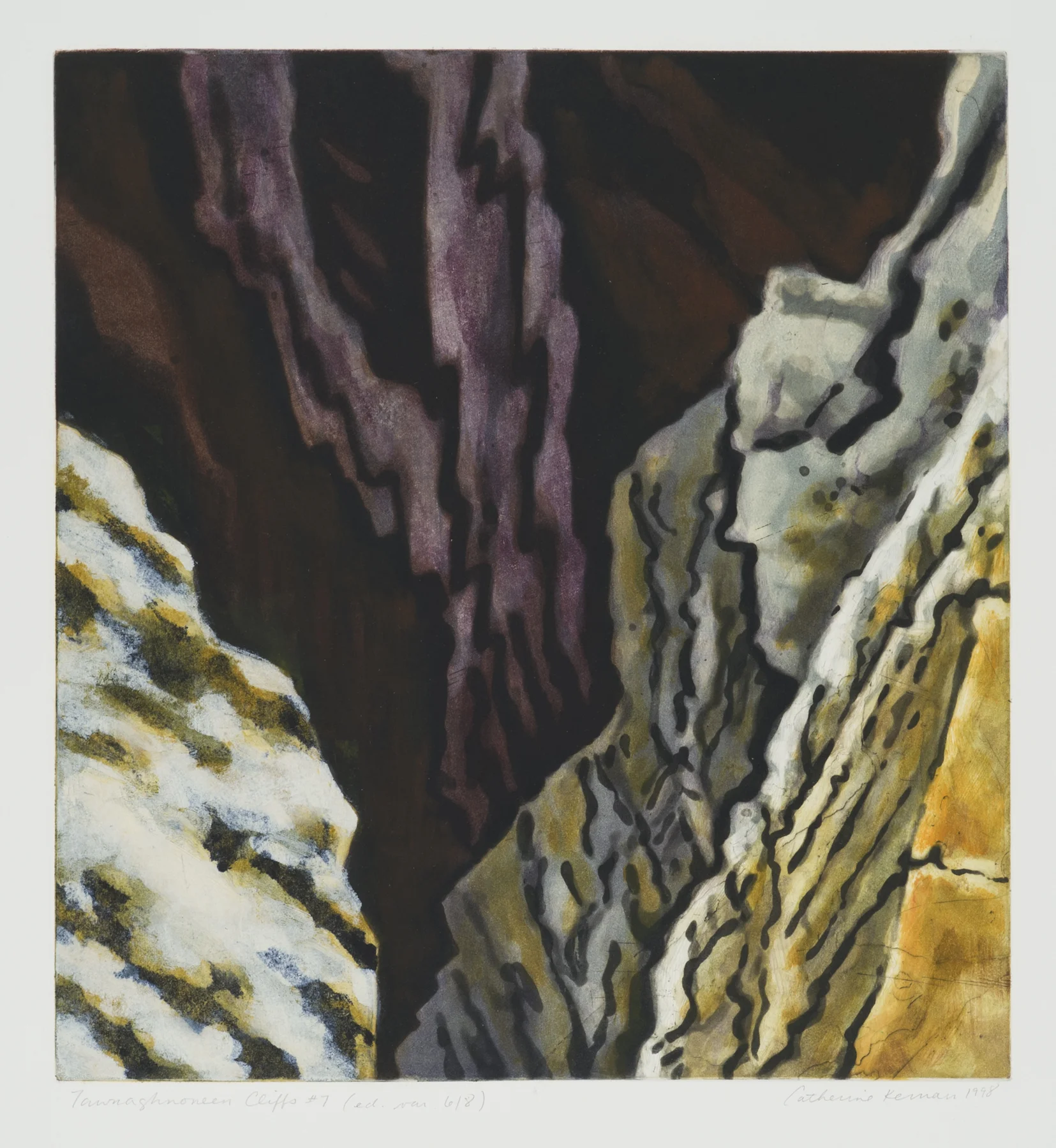
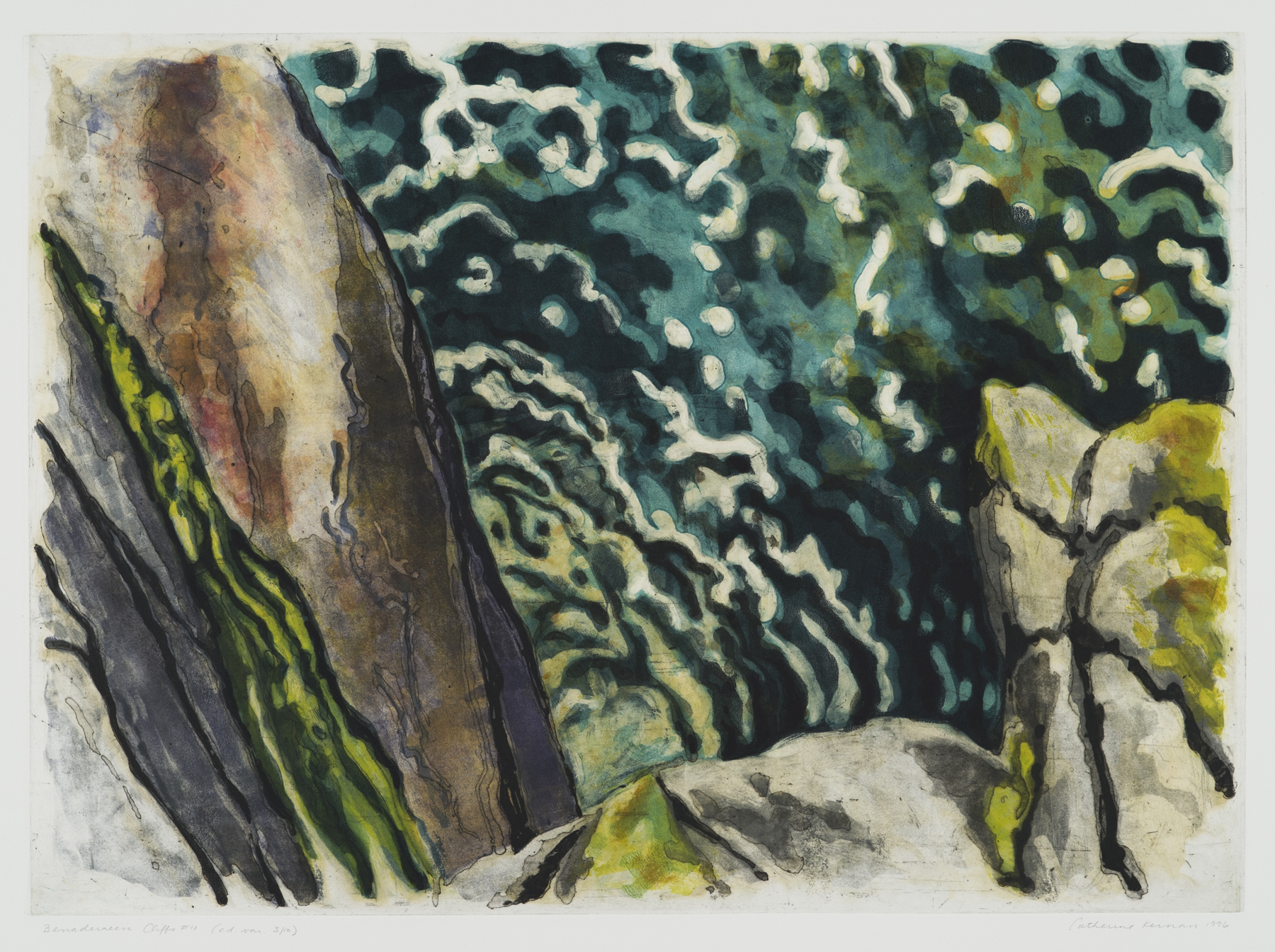
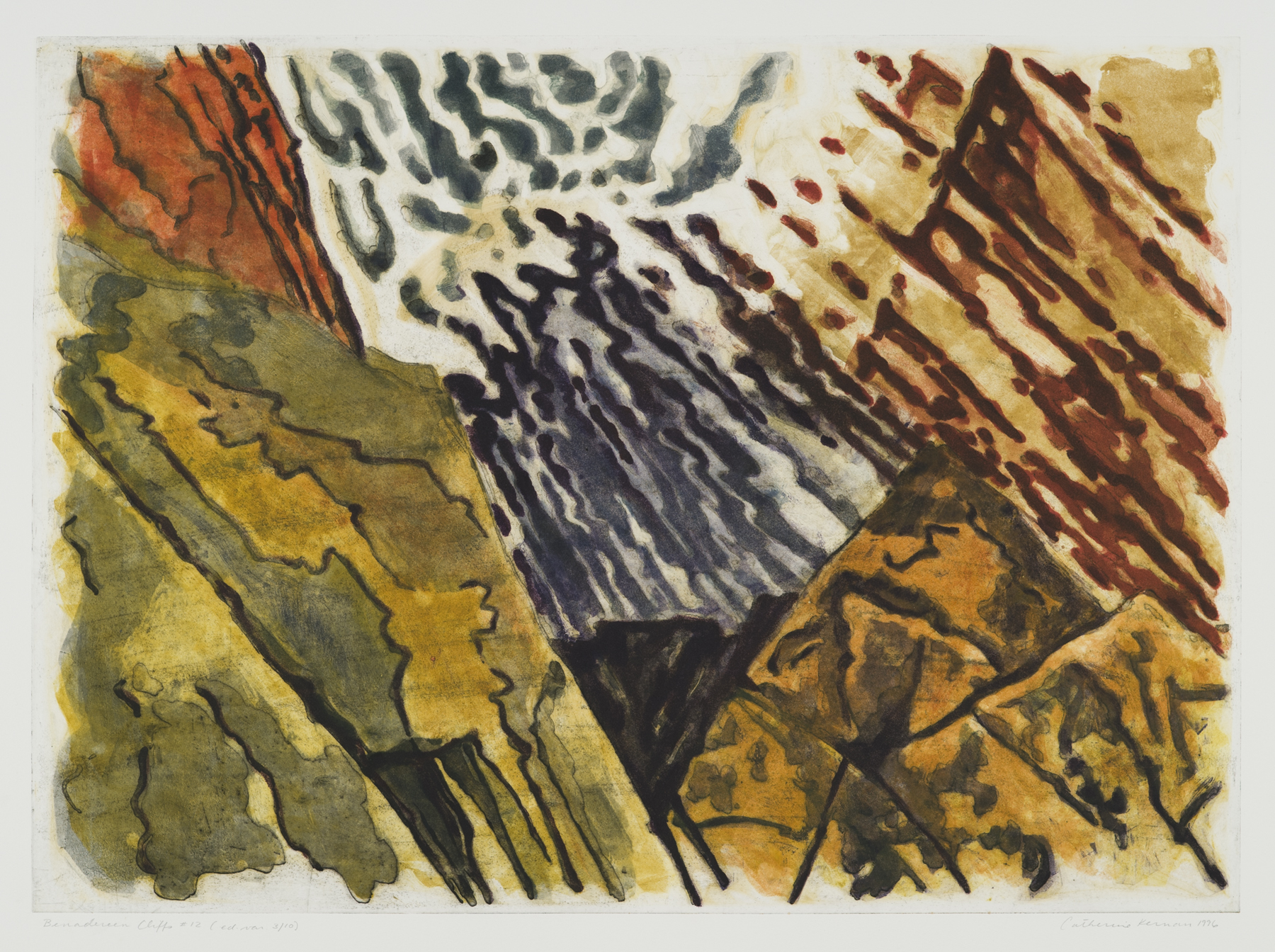
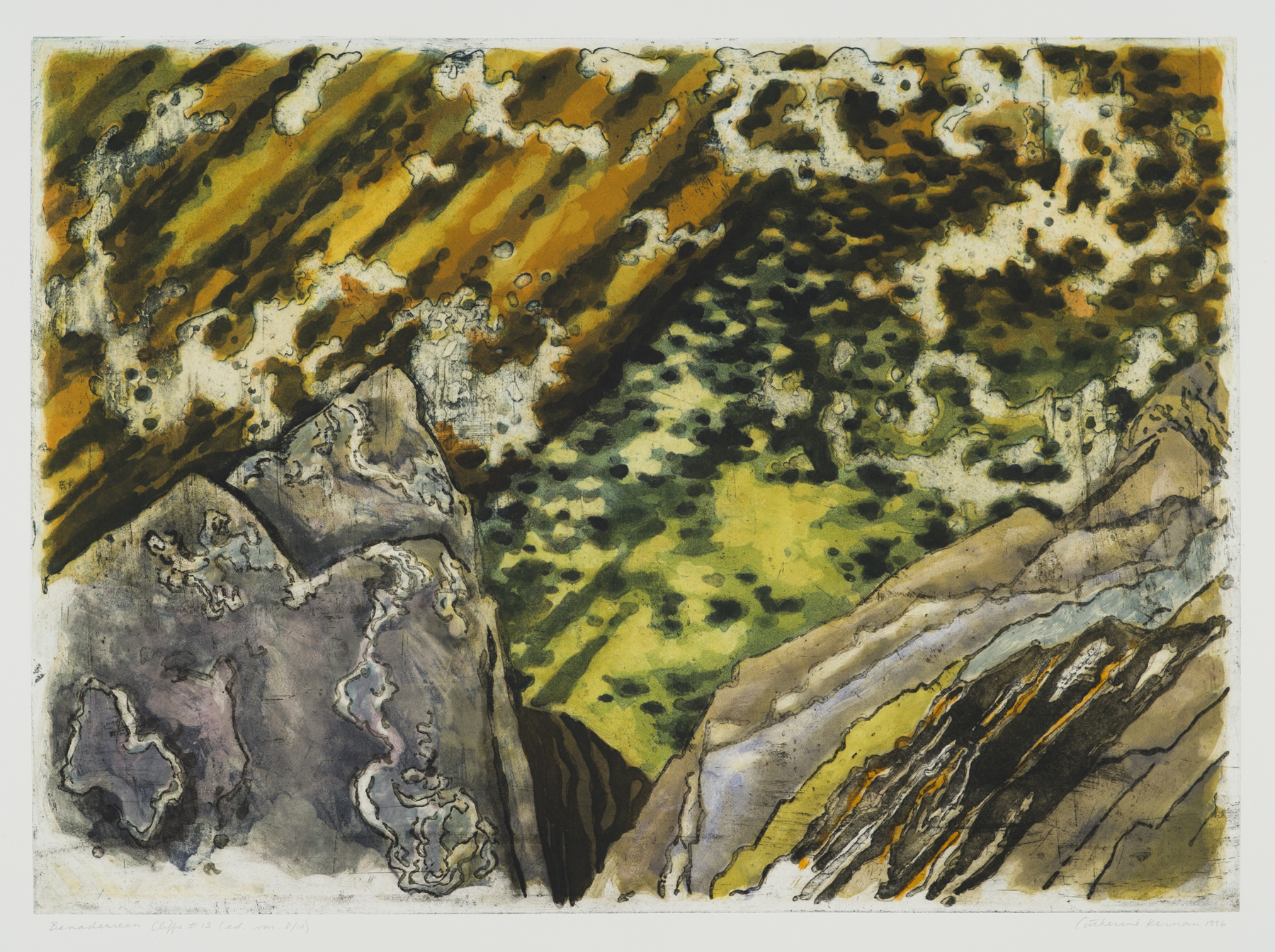
Kernan's images are rooted in the challenge and exhilaration of experiencing the natural world. The on site studies for the following nine editions titled Benaderreen Cliffs #9-#17 were done while sitting on the cliffs of North Mayo County in Ireland. The view is directed straight down to the water crashing on rocks far below incorporating a diagonal plunge past cliffs, and the straight on surface of the ocean. The variant editions are limited to 10 impressions each and measure 29.5" high x 36.5" wide.
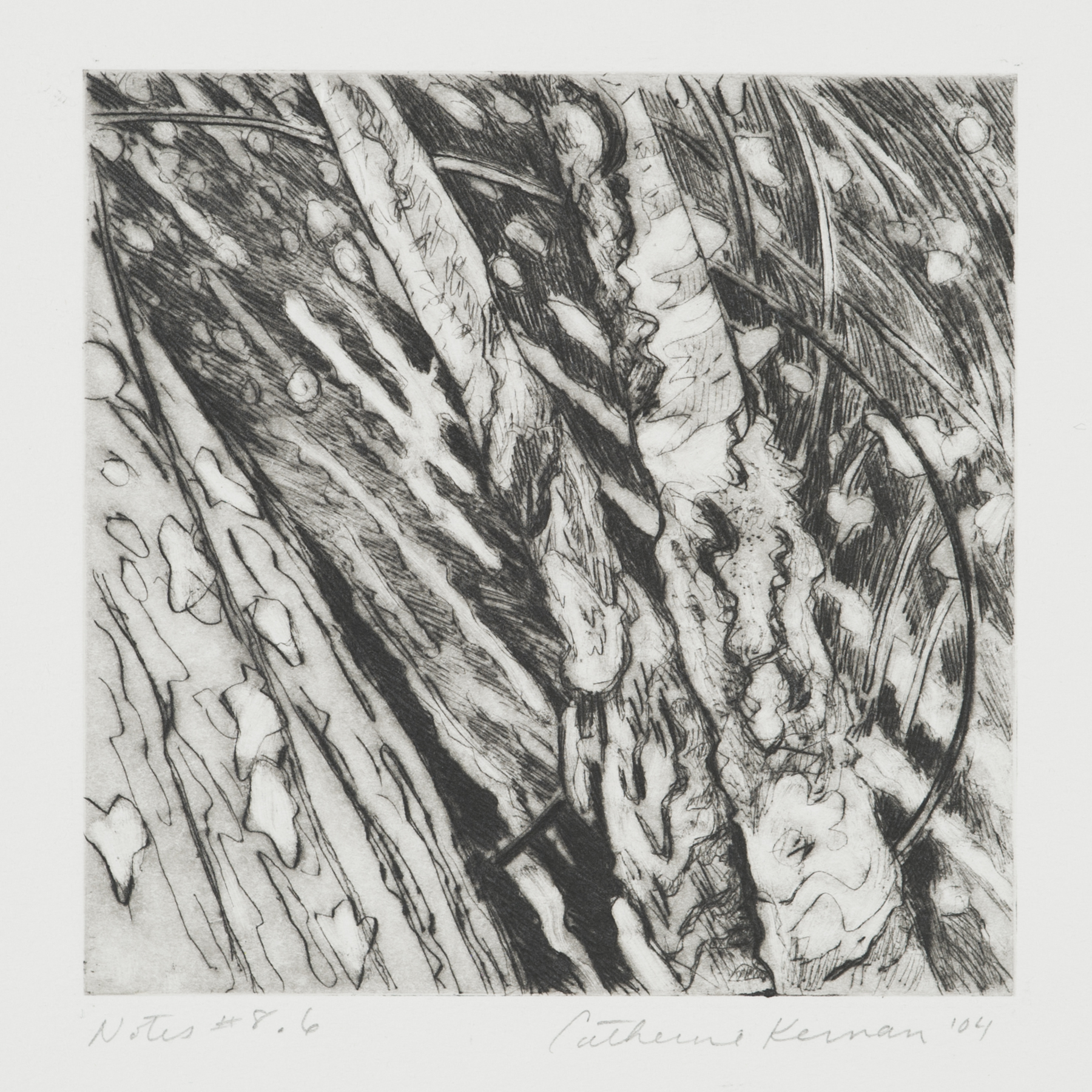
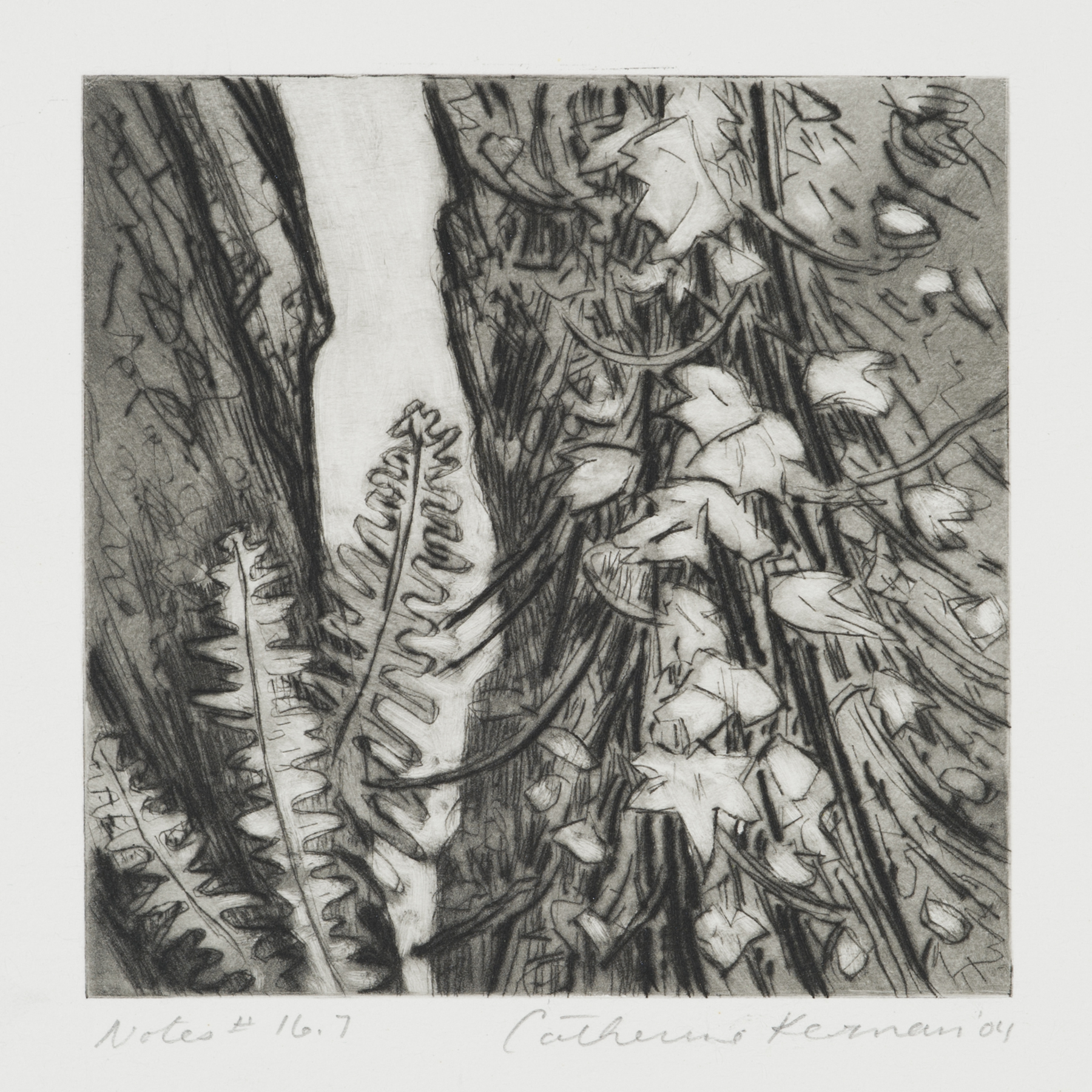
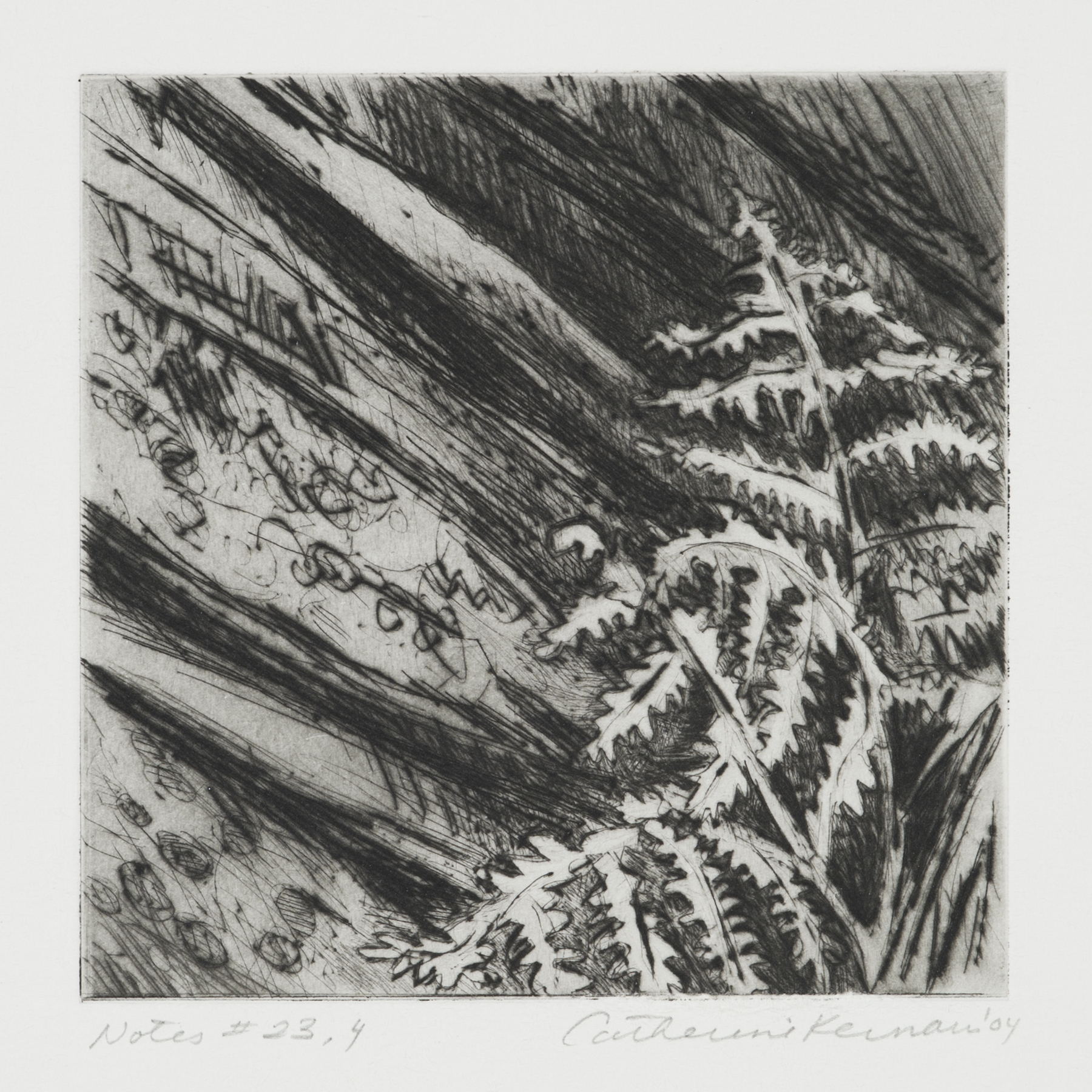
Technically, the prints in the Benaderreen Cliffs editions are monoprints. They combine a repeatable image etched onto a copper plate with many layers of color. Kernan states, "The dark line image repeats while the color varies from print to print within the edition. The layers of color were developed with many viscosity rolls, and wiping away. I used scratched and distressed copper plates and incorporated the marks into the images."
Kernan usually collects images in sketchbooks, recording the sustained scrutiny and rapt attention of an intense looking process en plein air. The artist reflects upon and reinterprets the images later, in the studio. The transformation through another medium, scale, and process ushers the images into the world of color and composition, mark making and metaphor, accident and control, allusion and illusion.
For a decade, Kernan has chosen as subject matter the complementary opposition of water and rock, fluidity and resistance, mobile and static energies, compression and release, a discontinuity in space, the breakpoint of water over an edge and the infusion of those energies into marks on a surface. Residency awards at the Ballinglen Arts Foundation, Co. Mayo, Ireland in 1992, 1993, 1994, and 1996 have inspired this series.
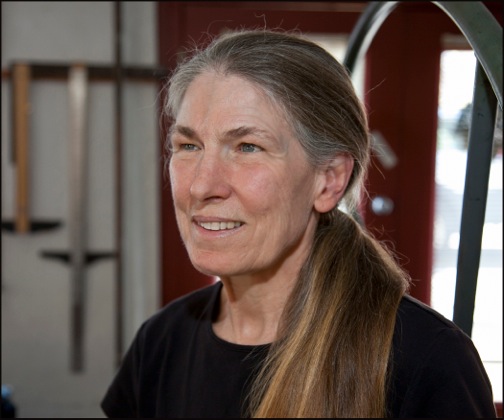
Catherine Kernan was born in Cooperstown, New York in 1948 and grew up in many parts of the world. She attended Wellesley College, received a Bachelor of Fine Arts degree from Cooper Union in New York City, and a Master of Fine Arts degree from the University of Wisconsin/Madison. Currently she has studios in Somerville, Massachusetts, where she is co-owner of Mixit Print Studio, and South Worcester, New York. In addition to conducting many workshops and critique sessions, she has held teaching appointments at the School of the Museum of Fine Arts, Wellesley College, Pine Manor College, and Vermont College of Norwich University.
Drawing on images gathered "en plein air" while on painting trips, Kernan works in her studio using a variety of painting and printmaking media. In recent years her imagery has concentrated on tightly focused, closely examined sequential segments of landscape, involving the viewer by means of active and rhythmic spatial shifts. Distortions and interference patterns caused by layers of moving, reflecting water surfaces serve to abstract and transcend particularity of place.
Ms. Kernan's work is regularly exhibited in private galleries across the country, national & international juried exhibitions, and invitational shows. Many private, and corporate collections own her work, as well as public collections, including: Achenbach Foundation for Graphic Arts, Boston Public Library, Grunewald Collection, New York Public Library, Library of Congress, Detroit Institute of Art, Davison Art Center at Wesleyan University, and the Fogg Art Museum. She has been awarded residencies at the Ballinglen Arts Foundation, Co. Mayo, Ireland (1992, 1993, 1994), the MacDowell Colony (1986) and the Virginia Center for the Creative Arts (1989).